
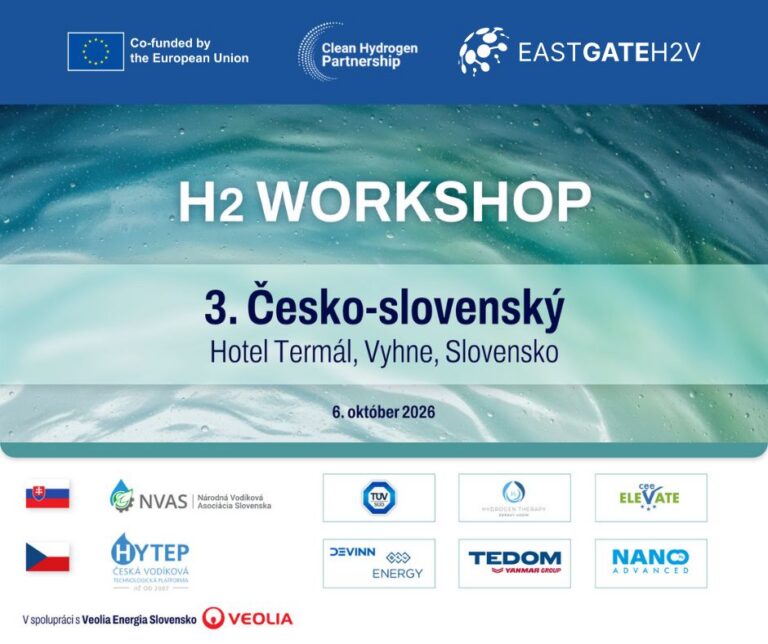
On 6 October 2026, the 3rd Czech-Slovak Hydrogen Workshop took place in Vyhne, Slovakia. The event brought together hydrogen experts, policymakers and industry representatives from both countries. Key topics included hydrogen sector developments, EU regulations, practical projects and cross-border cooperation. Discussions highlighted the importance of practical solutions and stronger connections between hydrogen production, infrastructure and real demand.
The workshop was organised by our project partner, the Slovak National Hydrogen Association (NVAS), in cooperation with the Czech Hydrogen Technology Platform (HYTEP). The event took place at Hotel Termál in Vyhne. Energy analyst Radovan Potočár moderated the programme.
The third edition built on previous meetings between the Slovak and Czech hydrogen communities. It provided an opportunity for knowledge exchange, technology presentations and discussions on the future of the hydrogen economy in Central Europe.
Hydrogen Sector Developments and EU Regulations
The morning programme began with presentations on the current state of the hydrogen sectors in Slovakia and Czechia. Ján Weiterschütz (NVAS) presented developments in Slovakia, ongoing projects and the upcoming Hydrogen Action Plan towards 2030. Martin Křemenák (HYTEP) provided an overview of the Czech hydrogen sector and its development priorities.
A dedicated session addressed European legislation and its impact on hydrogen projects. Ján Weiterschütz and Jan Sochor (HYTEP) discussed the revision of RED III, related delegated acts, low-carbon hydrogen and the EU Emissions Trading System (EU ETS).
The discussions highlighted the need for a predictable regulatory framework and clear rules. Technological neutrality and the role of low-carbon hydrogen in Europe’s energy transition were also important topics.
From High Expectations to Practical Solutions
One of the main sessions was the policy panel “How to Join Forces”. The discussion featured Petr Mervart from the Czech Ministry of Industry and Trade, Martin Hlinka from the Slovak Ministry of Economy, Martin Křemenák from HYTEP and Ján Weiterschütz from NVAS.
The panel highlighted the hydrogen sector’s transition towards a more pragmatic phase of development. Economically viable projects, available infrastructure and practical hydrogen applications are becoming increasingly important.
A key requirement is the connection between hydrogen production, distribution and end-use. Hydrogen valleys and regional hydrogen hubs play an important role in this process. These initiatives support cooperation between hydrogen producers, infrastructure operators and end-users.
Six Projects and Practical Experience
The afternoon programme featured six hydrogen projects and technological solutions from Slovakia and Czechia.
The Slovak presentations included contributions from Zuzana Šolopová (TÜV SÜD Slovakia), Hana Sopko and Eva Harnišová (Zdravý vodík), and Stanislava Malová (NVAS). The latter introduced the ELEVATECEE project and its activities supporting cooperation between hydrogen ecosystems in Central Europe.
The Czech contributions came from Jan Mašek (DEVINN / BTL), Josef Bezvoda (TEDOM) and Pavel Srbecký (NANO Advanced). Their presentations covered integrated hydrogen solutions, company activities and the development of PEM electrolysers.
The programme demonstrated the diversity of hydrogen technologies and applications. It also highlighted the importance of practical experience, technological innovation and international cooperation.
Site Visit to a New 1 MW PEM Electrolyser
The final part of the workshop focused on Veolia Energia Slovensko. Adrián Švec presented practical experience from the planning, construction and commissioning of a new 1 MW PEM electrolyser in Žiar nad Hronom.
A site visit followed the technical programme. Participants explored the new green hydrogen production facility.
The electrolyser uses electricity from Veolia’s photovoltaic power plant. Its expected annual production is approximately 50 tonnes of green hydrogen. The hydrogen can support energy applications within the industrial site and potentially other uses in the future.
The visit provided a concrete example of hydrogen technology deployment. It also demonstrated the potential to connect renewable electricity generation, hydrogen production and local energy demand.

Connecting Workshop Outcomes with EASTGATEH2V
The main conclusions of the workshop closely align with the objectives of EASTGATEH2V. The project is developing Slovakia’s first fully integrated Hydrogen Valley in the Košice region. Its activities support the establishment of an integrated regional hydrogen ecosystem.
EASTGATEH2V connects renewable hydrogen production with distribution and end-use in transport and industry. The project includes four hydrogen deployment sites and 4 MW of electrolyser capacity. It also supports hydrogen infrastructure development and the involvement of different end-users. Cooperation between regional partners, industry, public authorities and research organisations is a central element of this approach.
This integrated approach was among the main messages of the workshop. Hydrogen valleys offer a practical model for regional hydrogen economy development. They enable coordinated planning of production, infrastructure and demand within a single ecosystem.
Czech-Slovak cooperation also creates opportunities for knowledge exchange, joint solutions and stronger hydrogen value chains across Central Europe. The ELEVATECEE project also contributes to these objectives.
The 3rd Czech-Slovak Hydrogen Workshop highlighted the importance of continued dialogue between industry, policymakers and hydrogen stakeholders. Further progress in the hydrogen economy requires concrete investments, effective partnerships and real hydrogen demand.
More information about the workshop is available in the official workshop programme and on the websites of NVAS a HYTEP.
